
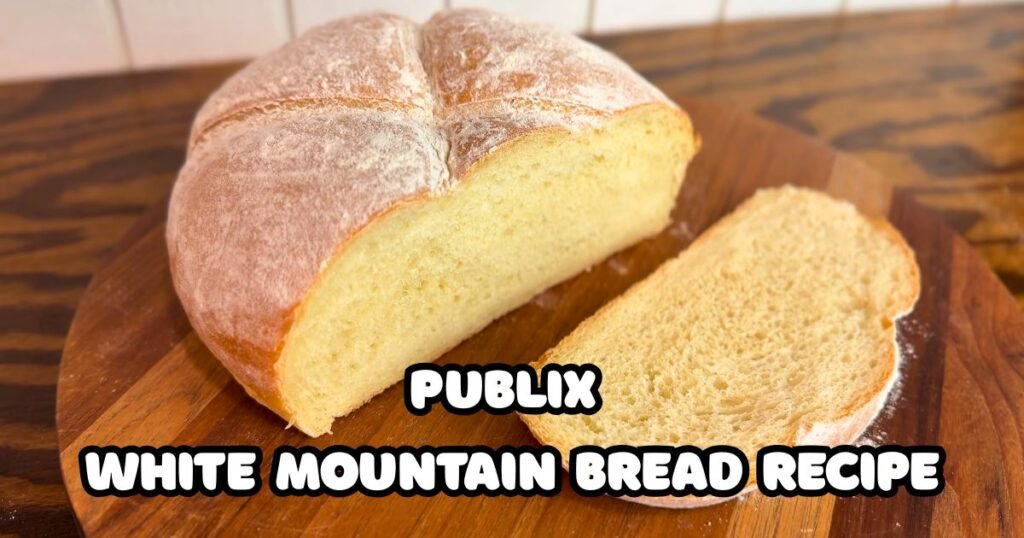
My mother-in-law lives two hours from the nearest store, so my husband brings her three loaves of bread when he travels for work. She asks for a loaf of Publix White Mountain Bread each week.
Last spring, I got tired of waiting and decided to bake my own version of Publix White Mountain Bread Recipe at home in Ohio. My first attempt turned out flat and pale. My daughter joked that the top looked like it got hit by a truck.
Last month, my husband asked for slices in his lunch instead of store bread. That’s when I knew the Bread Recipe was getting close.
This post shares the steps I use now, so you don’t need to drive to the store. This loaf gives you a soft, fluffy bakery crumb right at home.
Why I Started Making This Bakery-Style Loaf at Home
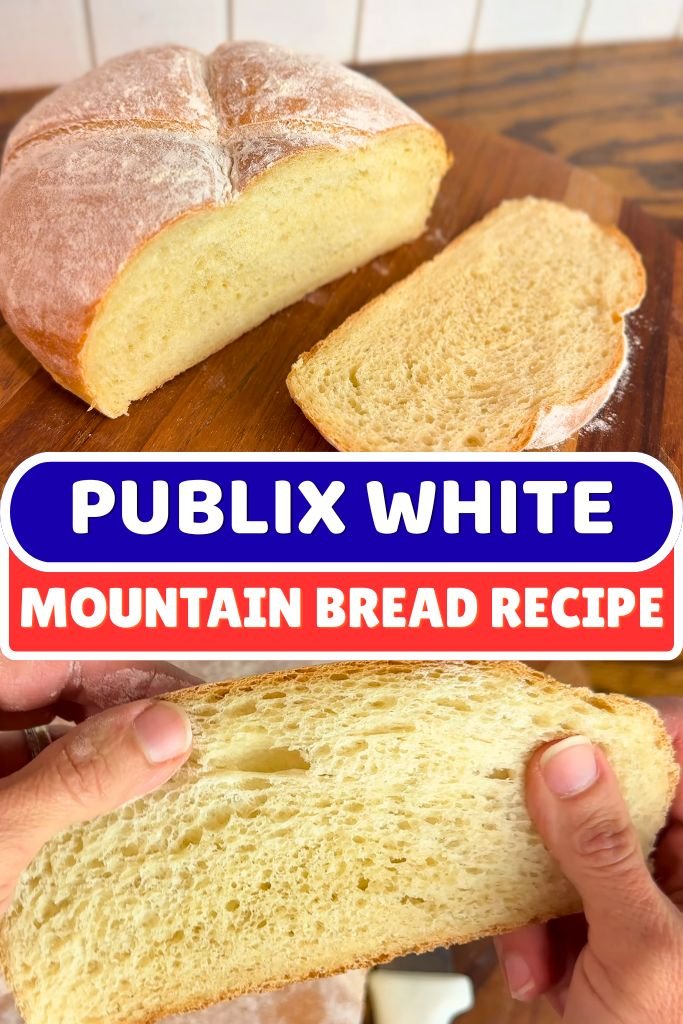
The bread has a thin, rustic crust with flour dusted on top that creates a pale, cracked surface instead of a hard shell. You can cut it thick for sandwiches, toast it for breakfast, or use it for French toast.
After baking, you can freeze this loaf for months. Making a double batch on a Saturday can fill your freezer for weeks. It also costs less than store-bought bread because flour and yeast are inexpensive.
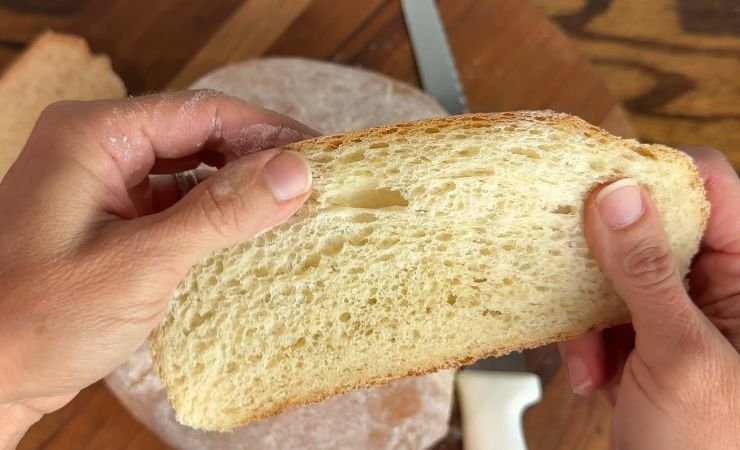
Regular sandwich bread is usually dense and sweet, with a soft crust that doesn’t brown well. In contrast, Publix White Mountain Bread is light and soft inside, like a dinner roll, with a thin, flour-dusted crust instead of a hard, shiny one.
Some people think this loaf is sourdough, but it isn’t. It uses commercial yeast, which means it lacks the tangy flavor of true sourdough. Sourdough is chewier and has open holes, while this loaf is tight and even from edge to edge.
Ingredients for Publix White Mountain Bread Recipe
1 ½ cups lukewarm water: This water wakes the yeast and hydrates the flour to help form gluten during kneading. Aim for a temperature of 100 to 110 degrees Fahrenheit, since hotter water can kill the yeast.
1 tablespoon granulated sugar: This sugar feeds the yeast and helps the crust turn a soft golden color. I use plain Domino sugar because it dissolves quickly and smoothly.
2 tablespoons olive oil: This oil coats the gluten strands, keeping the loaf tender as it cools. I choose Bertolli for its mild flavor, which doesn’t clash with the wheat.
4 ¼ cups bread flour: This flour has more protein than all-purpose flour, helping to build the gluten network that holds the loaf’s shape. I buy King Arthur flour in bulk from a local Amish store because it costs less than at the grocery store.
2 teaspoons fine sea salt: This salt slows down the yeast a bit to keep the dough from rising too fast, and it tightens the gluten. I use Morton fine sea salt, as skipping it makes the crumb loose.
1 tablespoon instant yeast: This yeast converts sugar into gas bubbles that puff up the crumb while baking. I choose Red Star Platinum because it mixes easily with the flour without needing to be proofed, and it stays strong for years if frozen.
1 tablespoon sunflower lecithin, optional: This natural emulsifier combines fat and water for a softer, more even crumb. I ordered NOW Foods online since it’s not available at my grocery store.
1 tablespoon vital wheat gluten, optional: This ingredient increases the flour’s protein, giving the dough more elasticity and allowing it to rise taller in the oven. I use Bob’s Red Mill, but too much can make the crumb rubbery.
The Bread-Baking Equipment I Actually Use
- Stand mixer: kneads the dough hands-free
- Kitchen scale: hand-me-down from my sister
- Instant-read thermometer: checks water and loaf temperature
- Bench scraper: handles sticky dough cleanly
- Baking sheet: holds the shaped loaf
- Cooling rack: keeps the bottom crisp
- Bread lame or sharp knife: scores the floured top
How to Make Publix White Mountain Bread
1. Mix the Wet Ingredients: Pour 1 ½ cups of lukewarm water into a stand mixer bowl. Then, stir in 1 tablespoon of sugar and 2 tablespoons of olive oil.
2. Add the Flour and Yeast: Add 4 ¼ cups of bread flour, 2 teaspoons of salt, 1 tablespoon of instant yeast, plus the optional lecithin and gluten, 1 tablespoon each. Keep the salt and yeast on opposite sides of the bowl.
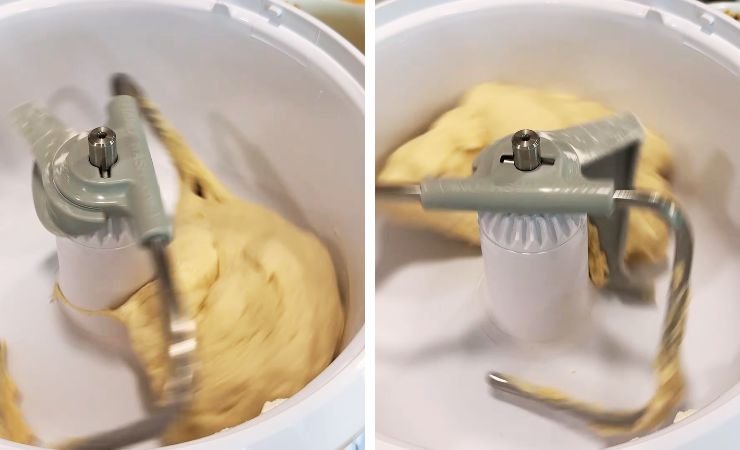
3. Knead the Dough: Run the mixer on low for 90 seconds, then check the dough; it should pull into a rough ball, and a dough still puddled at the bottom needs another tablespoon of flour.
Turn to medium-low and knead for 9 minutes, until smooth and tacky, springing back slowly when poked.
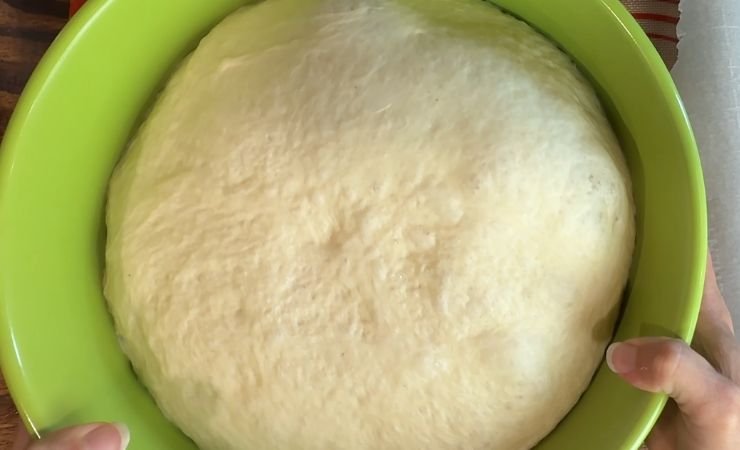
4. Let the Dough Rise: Oil a large bowl, turn the dough into it, and roll it once to coat. Cover with a damp towel and set it somewhere warm for 1 ½ to 2 hours, until roughly doubled and puffy, with air bubbles visible under the surface.
5. Shape the Loaf: Place the dough on a floured surface. Use your palms to press out the large air pockets. Bring the edges to the center to create tension.
Flip the dough so the seam is on the bottom. Pull the dough toward you until the top looks smooth and tight.
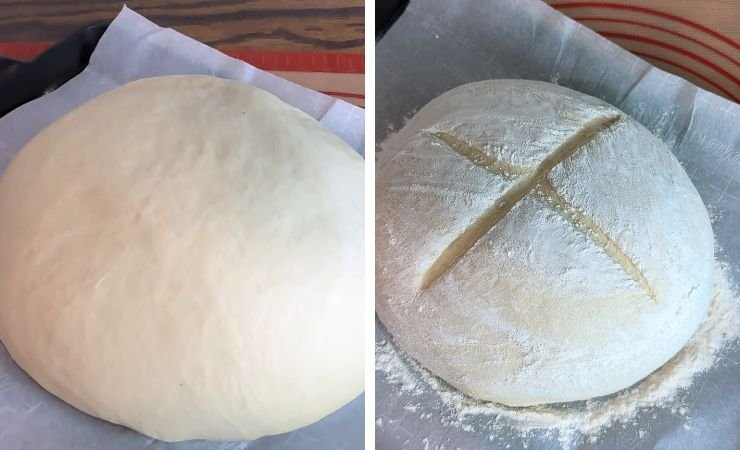
6. Second Rise: Cover the shaped loaf loosely and let it rise again for about 60 minutes, away from any draft. It should look noticeably larger and feel airy when pressed; a loaf that still feels dense needs 15 to 20 more minutes.
7. Flour and Score: Dust the top generously with flour, spreading it by hand without deflating the dough. Score about a quarter inch deep with a sharp blade, in any pattern; a shallow score still bakes fine, just less dramatic.
8. Bake: Bake in an oven preheated to 375°F for 32 to 35 minutes, until the crust turns pale gold under the flour and the loaf sounds hollow when tapped. An internal read of 195°F to 200°F confirms it’s done.
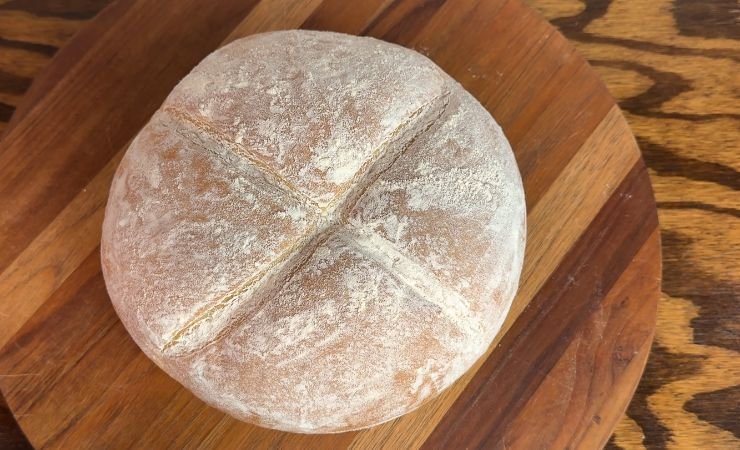
9. Cool Before Slicing: Lift the loaf off the baking sheet right away so the bottom doesn’t keep cooking from leftover heat.
Rest it on a cooling rack for at least 45 minutes before slicing, since cutting too early leaves a gummy layer down the center.
How to Make This Loaf in a Bread Machine
To make bread in a machine, start by adding the wet ingredients. Next, add the flour on top to keep it away from the yeast. Place the salt in one corner of the pan and make a small well in the center for the yeast.
Select the basic or white bread cycle and choose a light or medium crust setting. I remove the dough after the first mixing cycle to shape it by hand and bake it in a regular oven for a rounder loaf with a classic floured top.
If you are at a higher elevation, use about a quarter less yeast and add a little more water because thin air makes the dough rise faster. In humid kitchens, you may need to add more flour. In dry climates, add more water to stop the dough from cracking.
Common Bread-Baking Problems and How I Fix Them
1. No Rise At All: This usually means the yeast died in water that ran too hot, since anything past 120°F kills it.
2. Dense, Heavy Loaf: Under-kneading is the usual cause, since dough without enough gluten can’t trap the gas bubbles that make bread light.
3. Rock-Hard Crust: Skipping steam in the oven dries the surface fast, baking a hard shell before the crumb finishes.
4. Dry, Crumbly Slices: Too much flour worked in during kneading throws off the water balance the dough needs.
5. Collapsed Loaf: Over-proofing stretches the gluten past its limit, so the structure gives out in the oven’s heat.
6. Tough, Chewy Bread: Over-kneading past the smooth stage tightens the gluten more than the recipe needs.
Easy Ways I Customize This Homemade Bread
Honey White Mountain Bread: Swap the sugar for a tablespoon of raw honey, adding floral sweetness and a darker crust. I bake this for holiday mornings, sliced thick with butter.
Whole Wheat Version: Replace half the bread flour with whole wheat and add 2 extra tablespoons of water. The crumb turns denser, good under a hearty sandwich like roast beef.
Mini Loaves: Divide the dough into four pieces before the second rise and bake 20 minutes instead of 32. These work well for gift bags or a smaller household.
Sandwich Rolls: Divide the dough into eight pieces, shape into rounds, and bake 18 to 20 minutes. I use these for burgers on Friday nights.
Seeded Bread: Press sesame and poppy seeds into the floured top before scoring, adding crunch and a toasted flavor.
Dutch Oven Version: Bake the shaped loaf inside a covered Dutch oven for 20 minutes, then uncover for the last 12 to 15 minutes to brown the top. The enclosed heat traps steam, giving a thicker, crackled crust.
What to Serve With Freshly Baked White Mountain Bread
This loaf is great for sandwiches like turkey or roast beef with mustard. You can easily spread chicken salad or tuna salad on it, and it makes a crispy grilled cheese.
For breakfast, toast a thick slice with avocado or soak slices in egg and milk to make French toast. It also pairs well with soup. You can drop pieces into tomato soup to soak up the broth without falling apart, and it works well in chicken noodle soup, chili, or thick beef stew.
Simple spreads like butter, jam, honey, peanut butter, and cream cheese taste good on it.
On a cold evening, I toast two slices, spread one with peanut butter and the other with strawberry jam, and enjoy them with a bowl of tomato soup. This meal takes just ten minutes to prepare.
How to Store, Freeze, and Thaw Homemade Bread
You can prepare the dough for Publix White Mountain Bread the night before and keep it in the refrigerator for a slow, cold rise. This improves the flavor compared to making it all in one day.
After baking, the bread stays fresh for 3 to 4 days at room temperature if you store it in a paper bag or bread box.
Do not use sealed plastic bags, as they trap moisture, which can make the crust soft and lead to mold. If you want to store the bread longer, you can freeze it for up to 3 months. Make sure to wrap it tightly in plastic wrap and then in foil.
Before freezing, slice the loaf and place parchment paper between the pieces. This allows you to take out one or two slices at a time. You can warm a frozen slice in the toaster for soft bread.
You can also freeze unbaked dough. Shape it into a ball and put it in a greased bag for up to 1 month. To use it, thaw the dough in the refrigerator overnight, then let it rise again before baking.
Publix White Mountain Bread Recipe FAQs
1. Can I use active dry yeast instead of instant yeast?
Yes, though active dry yeast needs to dissolve in the warm water for about 5 minutes first. Skip that step and it may not activate fully, leaving a slower rise.
2. Do I need a stand mixer to make this bread?
No, this dough can be kneaded by hand on a floured counter for about 12 minutes, with the same soft crumb.
3. Can I skip the sunflower lecithin and vital wheat gluten?
Both are optional. Leaving them out still gives a soft loaf, just with a touch less oven spring.
4. Can I use all-purpose flour instead of bread flour?
Yes, though the lower protein content means a softer chew and less rise. Bread flour gives the loaf its classic bakery structure.
5. Why does my dough feel too sticky to shape?
Humidity and flour brands both affect hydration, so a sticky dough usually just needs another tablespoon or two of flour worked in.
6. Can this recipe be made gluten-free?
Not easily. This bread relies on real gluten development, and gluten-free blends behave too differently for a simple swap.
7. Why did the top crack somewhere other than my score line?
This happens when the score isn’t deep enough, or the blade drags instead of cutting clean through.
8. How long does the whole process take, start to finish?
Between both rises, shaping, and baking, plan on about 4 hours total, most of it hands-off.
9. Can I double this recipe for two loaves?
Yes, as long as your mixer bowl has room to knead a doubled batch. Bake both loaves on the same sheet, spaced apart.
10. How warm does my house need to be for the dough to rise properly?
A spot near 75 to 80°F works best, like the top of the refrigerator or an oven with just the light on.
Publix White Mountain Bread Recipe

Make this Publix White Mountain Bread Recipe at home for a soft, fluffy loaf with a thin, flour-dusted crust perfect for sandwiches and toast.
Ingredients
- 1½ cups lukewarm water
- 1 tablespoon granulated sugar
- 2 tablespoons olive oil
- 4¼ cups bread flour
- 2 teaspoons fine sea salt
- 1 tablespoon instant yeast
- 1 tablespoon sunflower lecithin, optional
- 1 tablespoon vital wheat gluten, optional
Instructions
- Pour 1 ½ cups of lukewarm water into a stand mixer bowl. Then, stir in 1 tablespoon of sugar and 2 tablespoons of olive oil.
- Add 4 ¼ cups of bread flour, 2 teaspoons of salt, 1 tablespoon of instant yeast, plus the optional lecithin and gluten, 1 tablespoon each. Keep the salt and yeast on opposite sides of the bowl.
- Run the mixer on low for 90 seconds, then check the dough; it should pull into a rough ball, and a dough still puddled at the bottom needs another tablespoon of flour.
- Turn to medium-low and knead for 9 minutes, until smooth and tacky, springing back slowly when poked.
- Oil a large bowl, turn the dough into it, and roll it once to coat. Cover with a damp towel and set it somewhere warm for 1 ½ to 2 hours, until roughly doubled and puffy, with air bubbles visible under the surface.
- Place the dough on a floured surface. Use your palms to press out the large air pockets. Bring the edges to the center to create tension.
- Flip the dough so the seam is on the bottom. Pull the dough toward you until the top looks smooth and tight.
- Cover the shaped loaf loosely and let it rise again for about 60 minutes, away from any draft. It should look noticeably larger and feel airy when pressed; a loaf that still feels dense needs 15 to 20 more minutes.
- Dust the top generously with flour, spreading it by hand without deflating the dough. Score about a quarter inch deep with a sharp blade, in any pattern; a shallow score still bakes fine, just less dramatic.
- Bake in an oven preheated to 375°F for 32 to 35 minutes, until the crust turns pale gold under the flour and the loaf sounds hollow when tapped. An internal read of 195°F to 200°F confirms it’s done.
- Lift the loaf off the baking sheet right away so the bottom doesn’t keep cooking from leftover heat.
- Rest it on a cooling rack for at least 45 minutes before slicing, since cutting too early leaves a gummy layer down the center.
Nutrition Information:
Yield: 12 Serving Size: 1Amount Per Serving: Calories: 188
This Publix White Mountain Bread Recipe isn’t a diet food, but it stays close to any basic yeast loaf nutritionally, and it contains no dairy or eggs, so it works fine on a vegan table without changes.
It’s not low fat either, thanks to the oil in the dough, though the amount per slice stays small.