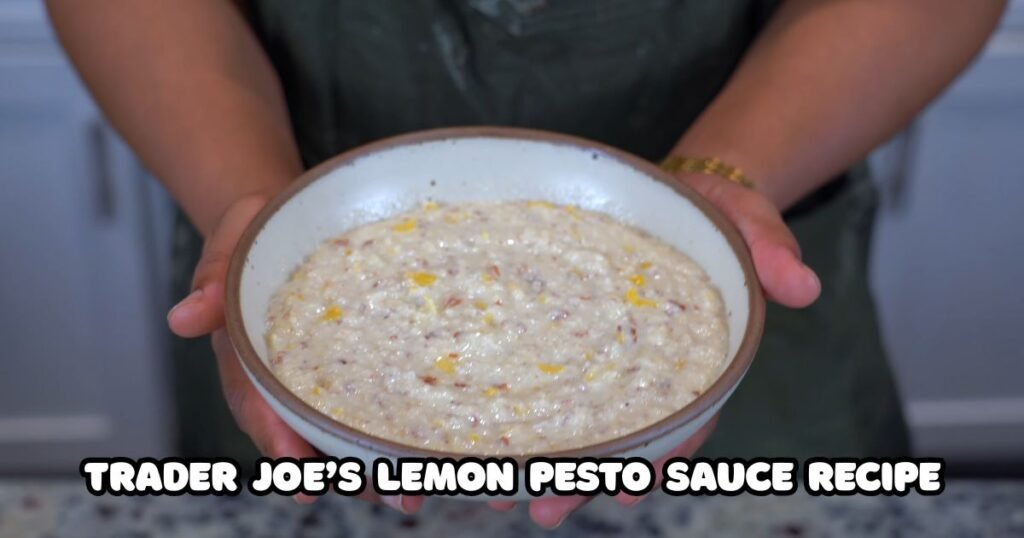
Trader Joe’s Lemon Pesto Sauce Recipe showed up on my store shelf this spring, wedged between the basil pesto and the marinara jars near the register. I grabbed two jars without reading the label, drawn in by the bright yellow lid on a gray Tuesday.
My husband tried the jarred sauce first, straight off a spoon, before dinner even started. He asked why our regular pesto suddenly disappeared from the fridge door. That question is the whole reason this recipe exists.
I went back to Trader Joe’s three weeks later for more jars and found an empty shelf tag where the sauce used to sit. A store worker told me it comes and goes with the seasons, so I decided to build a version I could make anytime.
Testing batches became a kitchen project, using a food processor older than my youngest kid. This post covers what I learned, jar by jar, mistake by mistake, from bitter batches to one that finally tasted right.
What Is Trader Joe’s Lemon Pesto Sauce?
Trader Joe’s Lemon Pesto Sauce is a jarred product made from crushed whole lemons, sunflower seed oil, Grana Padano cheese, almonds, salt, and black pepper, per the jar’s own label. There’s no olive oil in it, which surprises home cooks who default to it.
This Recipe is my homemade copycat, built from label reading and kitchen testing, not an official Trader Joe’s formula. I can’t promise it matches the factory version exactly, since commercial processing does things a home blender can’t.
Trader Joe’s sells the real jar as a limited-edition item tied to warmer months. Store stock comes and goes with the season, so check your local shelf before planning a trip around it.
People who find lemonade too sharp at full strength might find this one intense. I usually tell first-time tasters to start with a small spoonful on pasta, then add more once they’ve tried it.
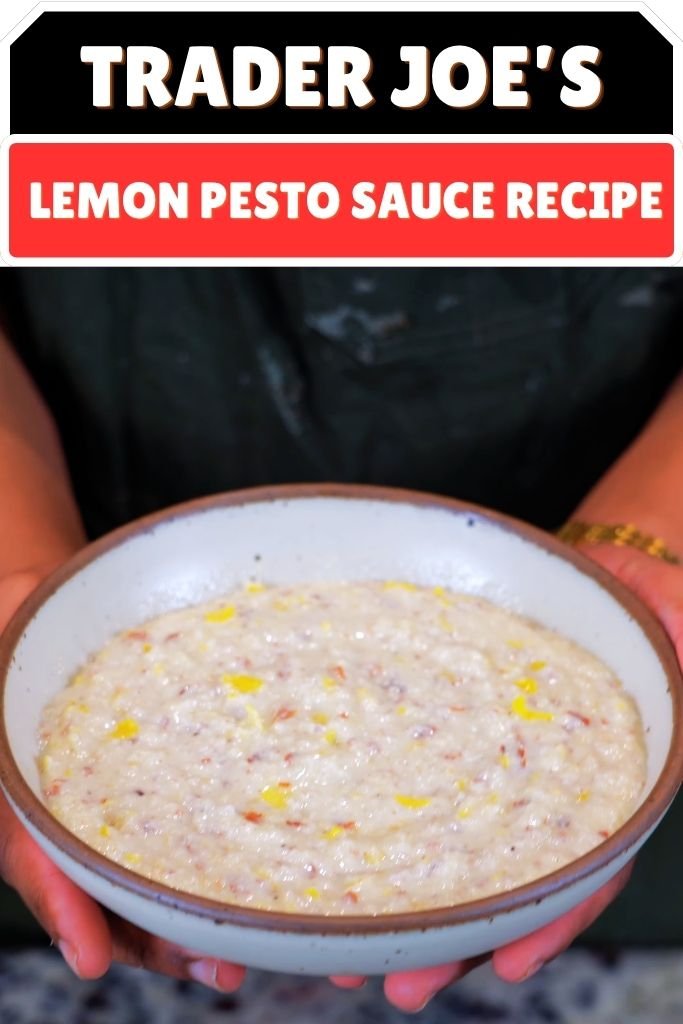
Why I Love This Pesto Sauce
I make a version of this dish at home using olive oil and Pecorino cheese, which are easy to keep on hand. Fresh citrus, like a lemon from this week’s grocery trip, really adds to the flavor.
It’s tough to match the exact texture of store-bought versions, since commercial methods do things that home cooks can’t fully replicate.
Some specialty stores sell jarred lemon-basil pesto blends that mix basil with lemon, making them closer to traditional pesto than Trader Joe’s lemon-only version.
This item is limited-edition and is restocked by season, so you should check your local store. For the freshest and most citrus flavor, homemade pesto is the better choice. If you want convenience with no preparation, grab the store-bought jar when it’s available.
Ingredients for Trader Joe’s Lemon Pesto Sauce
2 medium lemons, peeled with pith removed: These form the base of the sauce instead of basil leaves, giving pure citrus body without much bitterness. I use whatever lemons look best at my regular grocery run, usually a firm, heavy one.
Removing the pith matters here. Left-on pith turned one of my early batches noticeably bitter, closer to grapefruit peel than lemon.
2 tablespoons lemon zest: Zest adds concentrated lemon oil on top of the peeled flesh, sharpening the citrus punch without adding extra liquid. I zest with a fine microplane before peeling, and keep it in a small bowl until needed.
⅓ cup fresh lemon juice, plus more to taste: Juice thins the sauce and adds tartness the whole lemons alone don’t fully deliver. Bottled juice works in a pinch, though juice from the same lemons you zested tastes rounder.
¾ cup raw almonds, skin on: Toasted almonds give this sauce its nutty crunch and pale color, standing in for the pine nuts in classic basil pesto. Keep the skins on, since that’s where the deepest toasted flavor comes from.
Walnuts work well in place of almonds, though they push the flavor closer to bitter and skew the color slightly darker.
1 cup finely grated Pecorino Romano cheese: Pecorino brings the salty, sharp backbone that balances all that citrus. I buy a wedge and grate it myself, since pre-shredded cheese carries anti-caking starch that keeps sauce from blending smooth.
Grana Padano is the cheese in Trader Joe’s actual jar, and it works well in place of Pecorino for a gentler, less funky finish.
2 cloves garlic: Garlic adds sharp background heat that keeps the sauce from tasting flat against all that lemon. Trader Joe’s own version skips garlic entirely, so leave it out for a closer match to the original jar.
1 scant teaspoon granulated sugar: A small amount of sugar rounds out the sourness without making the sauce taste sweet, mirroring what’s listed in the real jar’s ingredients. Skip it for a sharper, more purely tart sauce.
½ teaspoon kosher salt: Salt pulls the lemon and cheese flavors together and keeps the sauce from tasting sour without depth. Start with less when using a naturally salty cheese, since Pecorino already carries plenty on its own.
¼ teaspoon black pepper, fresh ground: A small amount of pepper adds warmth in the background without turning the sauce spicy. I grind mine fresh from a pepper mill, since pre-ground pepper loses punch within a few months.
¾ cup extra virgin olive oil: Oil binds everything into a spoonable sauce and carries the fat-soluble flavor from the garlic and zest. Trader Joe’s jar uses sunflower seed oil instead, which tastes more neutral and less peppery than olive oil.
2 tablespoons cold water: A splash of water loosens the sauce when the blender bogs down on all that almond and cheese. Add it a tablespoon at a time near the end, since too much thins the sauce out fast.
Tools I Recommend for This Recipe
- Food processor: blends everything smooth
- Microplane zester: for fine lemon zest
- Small sheet pan: for toasting almonds
- Citrus juicer: for fresh lemon juice
- Rubber spatula: for scraping down sides
- Small mixing bowl: for holding zest
How I Make Trader Joe’s Lemon Pesto Sauce
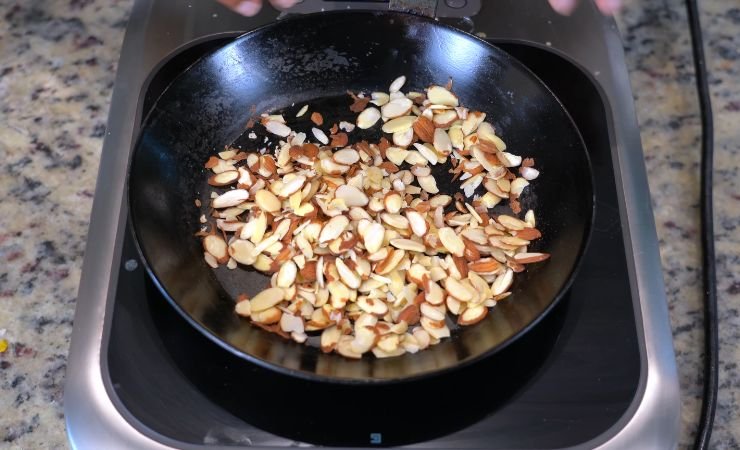
1. Toast the Almonds: I spread the almonds in a single layer on a small sheet pan and toasted them at 350°F for 8 minutes, shaking the pan once so they didn’t scorch on one side.
I pulled them out once the skins darkened slightly and the kitchen smelled toasty, close to roasted chicken skin. Let them cool 5 minutes before blending.
2. Zest and Peel the Lemons: I zested both lemons with a fine microplane before peeling them by hand, cutting away every bit of white pith, since leftover pith made my second test batch taste bitter.
The zest should smell strongly of lemon oil and look bright yellow, with almost no white pith showing through it.
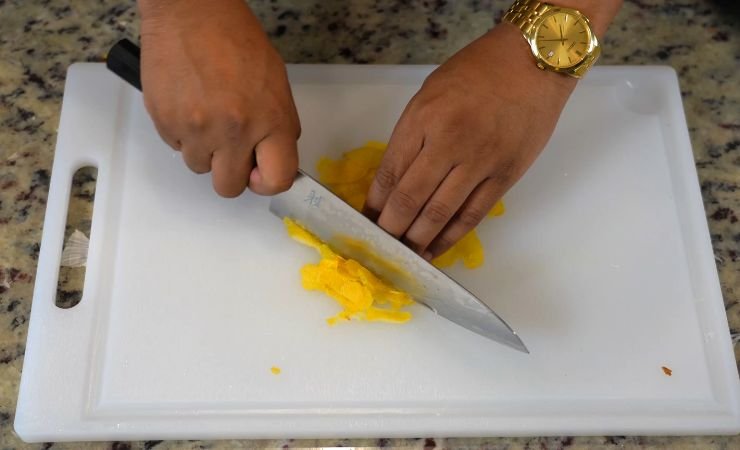
3. Blend Garlic, Salt, and Sugar: First, put the garlic, salt, and sugar into the food processor. Pulse it 6 or 7 times. The salt will help break down the garlic into a rough paste. I usually do this by hand.
The mixture should turn into a coarse, wet paste, not a smooth puree, before you add the lemon.
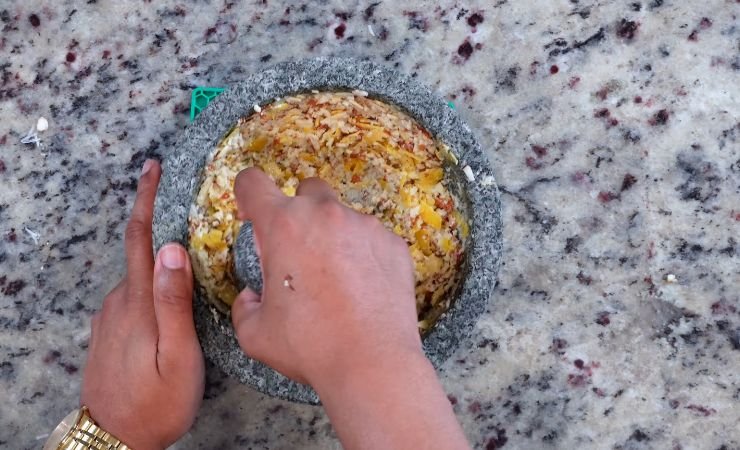
4. Add the Lemon Flesh, Zest, and Juice: Next I added the peeled lemon segments, the zest, and the fresh lemon juice, blending for about 20 seconds until the mixture turned loose and pulpy, closer to coarse lemonade than sauce.
Doneness here means evenly pulpy with no large lemon chunks left, though a few visible zest flecks are fine.
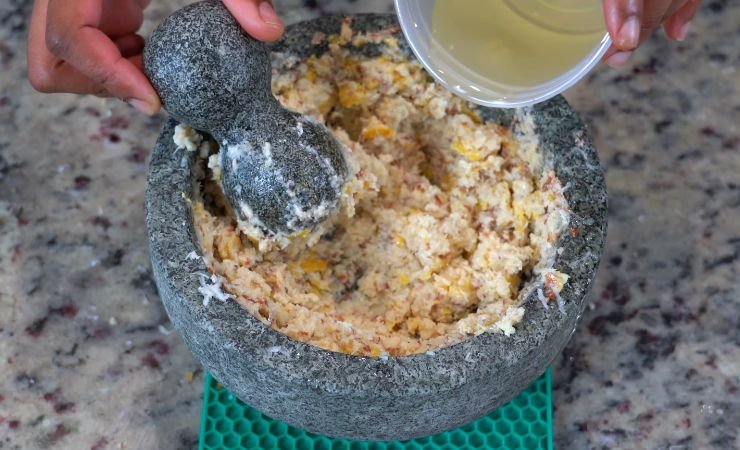
5. Add the Cheese and Oil: When the processor is running low, first add most of the Pecorino cheese. Then, slowly drizzle in the olive oil. Finally, mix in the rest of the cheese and the pepper.
I dumped all the oil in at once during my first attempt, and the sauce split into an oily layer on top. Adding it slowly, like building a salad dressing, fixed that completely.
6. Final Blend and Adjust: Run the processor for another 15 seconds. Scrape down the sides once. The sauce should turn creamy, with small pieces of toasted almond skin still visible.
It should look thick but pourable, close to a loose hummus. Add cold water a tablespoon at a time, in case it feels too thick to scrape off a spoon easily.

Expert Tips for Trader Joe’s Lemon Pesto Sauce
1. Bitter Aftertaste: Usually comes from leftover pith or over-toasted almonds. Peel lemons down to the flesh completely, and pull almonds from the oven right as the skins turn golden, not dark brown.
2. Too Sour: Cut the lemon juice by half and add it back a spoonful at a time. Too much straight juice, on top of the whole lemons, pushes the sauce past tart into sharp.
3. Too Oily: Blend in a bit more cheese or a few extra almonds to soak up the excess oil. This happens most when oil gets streamed in too fast at the start.
4. Too Thick: Add cold water a tablespoon at a time until the sauce falls off a spoon in a slow ribbon, not a clump.
5. Too Thin: Add another tablespoon or two of grated cheese, then pulse briefly to thicken without diluting the citrus flavor.
6. Grainy Instead of Creamy: Over-processing turns almonds into paste and loses their crunch. Pulse in short bursts near the end instead of running the processor continuously.
Delicious Variations on Trader Joe’s Lemon Pesto Sauce
Lemon Pesto Chicken Pasta: Toss this sauce with grilled chicken breast and a short pasta shape like penne, using a splash of pasta water to loosen everything. I serve this on busy weeknights, finished with extra grated cheese on top.
Lemon Pesto Shrimp Pasta: Sauté shrimp in a hot pan for 2 minutes per side, then toss with linguine and the sauce off the heat, so the citrus stays bright instead of cooking flat.
Lemon Pesto Salmon: Spread a thin layer over a salmon fillet before roasting at 400°F for about 12 minutes. The sauce forms a light crust and keeps the fish from drying out.
Lemon Pesto Orzo: Stir the sauce into warm cooked orzo with a handful of spinach or arugula for a simple side dish that pairs well with roasted chicken or grilled fish.
Lemon Pesto Pasta Salad: Toss cooled pasta with the sauce, halved cherry tomatoes, and cubed mozzarella for a cold dish that holds up well at a potluck or picnic.
What Dishes to Try With This Lemon Pesto Sauce
This sauce works best tossed with hot pasta, loosened with a splash of starchy pasta water so it coats every noodle instead of clumping. A few tablespoons goes a long way given how concentrated the lemon flavor is.
Spoon it over roasted salmon or seared shrimp as a finishing sauce, added once the fish is off the heat so the citrus stays sharp. It also works spread on toast, crostini, or a sandwich in place of mayonnaise.
Thin the sauce with a little extra lemon juice or water and it turns into a quick salad dressing base. The same thinned version works well drizzled over roasted potatoes or vegetables straight from the oven.
For a simple dinner, I toss it with hot orzo, add a handful of arugula, then top the bowl with a piece of pan-seared salmon.

Storage Tips
Store leftover sauce in an airtight container in the refrigerator for up to 5 days. A thin layer of olive oil poured over the top before sealing helps slow down browning from air exposure.
For longer storage, freeze it in small portions or an ice cube tray, then transfer the frozen cubes to a freezer bag for up to 3 months. Thaw only what you need for a single meal.
Texture shifts slightly after freezing, since the oil and citrus can separate a bit once thawed. A quick stir, or a short pulse in the food processor, brings it back together.
Turn leftovers into a creamier pasta sauce by stirring in a splash of heavy cream or extra Parmesan along with a little reserved pasta water.
Trader Joe’s Lemon Pesto Sauce FAQs
1. How do I make this nut-free?
Swap the almonds for raw sunflower seeds or pepitas, toasted the same way. Flavor turns milder and less rich, but the texture stays close to the original.
2. Is there a dairy-free version?
Replace the cheese with 2 tablespoons nutritional yeast plus a pinch more salt. The sauce loses some richness but keeps its sharp citrus flavor intact.
3. Can I make this vegan?
Combine the nut-free and dairy-free swaps above. The result turns lighter in both flavor and texture, closer to a citrus vinaigrette than a creamy pesto.
4. Is this recipe gluten-free?
The homemade version is naturally gluten-free, since none of the ingredients contain wheat. Store-bought jars should be checked directly, since labels and formulas can change.
5. How much sauce should I use per pound of pasta?
Start with about ⅓ cup for a full pound of pasta, then add more a tablespoon at a time to taste, since the flavor is concentrated.
6. Should this sauce be heated on the stove?
Add it off the heat, or over the lowest possible heat, only long enough to warm through. High heat dulls the fresh citrus and can split the oil.
Trader Joe's Lemon Pesto Sauce Recipe
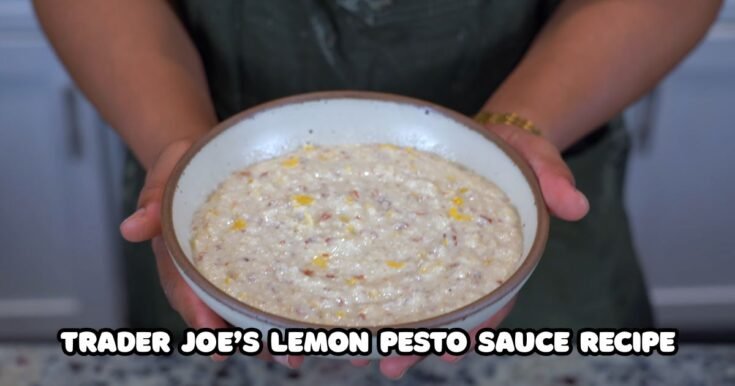
Trader Joe's Lemon Pesto Sauce Recipe uses whole lemons and toasted almonds instead of basil and pine nuts, made from scratch in about 23 minutes.
Ingredients
- 2 medium lemons, peeled, pith removed
- 2 tablespoons lemon zest
- ⅓ cup fresh lemon juice
- ¾ cup raw almonds, skin on
- 1 cup finely grated Pecorino Romano cheese
- 2 cloves garlic
- 1 scant teaspoon granulated sugar
- ½ teaspoon kosher salt
- ¼ teaspoon black pepper
- ¾ cup extra virgin olive oil
- 2 tablespoons cold water
Instructions
- Spread the almonds on a small sheet pan and toast at 350°F for 8 minutes, shaking the pan once, until the skins darken slightly and smell toasty. Cool for 5 minutes.
- Zest both lemons with a microplane, then peel them by hand, removing all white pith.
- Pulse the garlic, salt, and sugar in a food processor 6 to 7 times into a rough paste.
- Add the peeled lemon segments, zest, and lemon juice. Blend about 20 seconds until loose and pulpy.
- With the processor on low, stream in most of the cheese, then the olive oil slowly, then the remaining cheese and pepper.
- Blend another 15 seconds, scraping down the sides once, until creamy with visible flecks of almond skin. Add cold water a tablespoon at a time to loosen, as needed.
Nutrition Information:
Yield: 12 Serving Size: 1Amount Per Serving: Calories: 200
Trader Joe’s Lemon Pesto Sauce Recipe is strong, so start with a small amount and add one spoonful at a time until it tastes right for you. This sauce rewards small changes more than strict measurements.